Why the log matters more than the inspection
Most buildings get inspected far more often than they get audited. Someone tests the alarm, checks the extinguishers, walks the escape routes — and then the knowledge of what they saw lives in their head, or on a clipboard that ends up in a drawer. When an auditor or insurer turns up, none of that effort counts unless it was written down in a form that can be examined later. The inspection is the work; the log is the proof, and only the proof is auditable.
This becomes painfully clear after an incident. If a fire breaks out and a fire door was wedged open or an extinguisher was out of date, the first question is always the same: did anyone know, and what did they do about it? A log that shows the issue was spotted, recorded, escalated, and resolved demonstrates a responsible, systematic approach. A log with gaps — months with no entries, items raised but never closed — does the opposite. It can shift liability onto the building owner or responsible person and undermine an insurance claim.
So the goal isn't just to inspect more. It's to make sure every inspection leaves a permanent, dated, defensible mark. A log you can hand over without flinching is the real deliverable, and it's worth designing your process around that outcome from the start.
What a defensible log entry actually contains
A strong entry answers four questions without anyone having to ask: what was checked, what was found, when, and by whom. "Checked fire doors" is not an entry — it's a note to yourself. "Inspected all six fire doors on level 2; door FD-204 fails to self-close, gap at base exceeds tolerance" is something an auditor can read, understand, and trust. Each item should name the specific asset or area, state the result against a known standard, and record the inspector. Vague entries read as guesswork; specific ones read as competence.
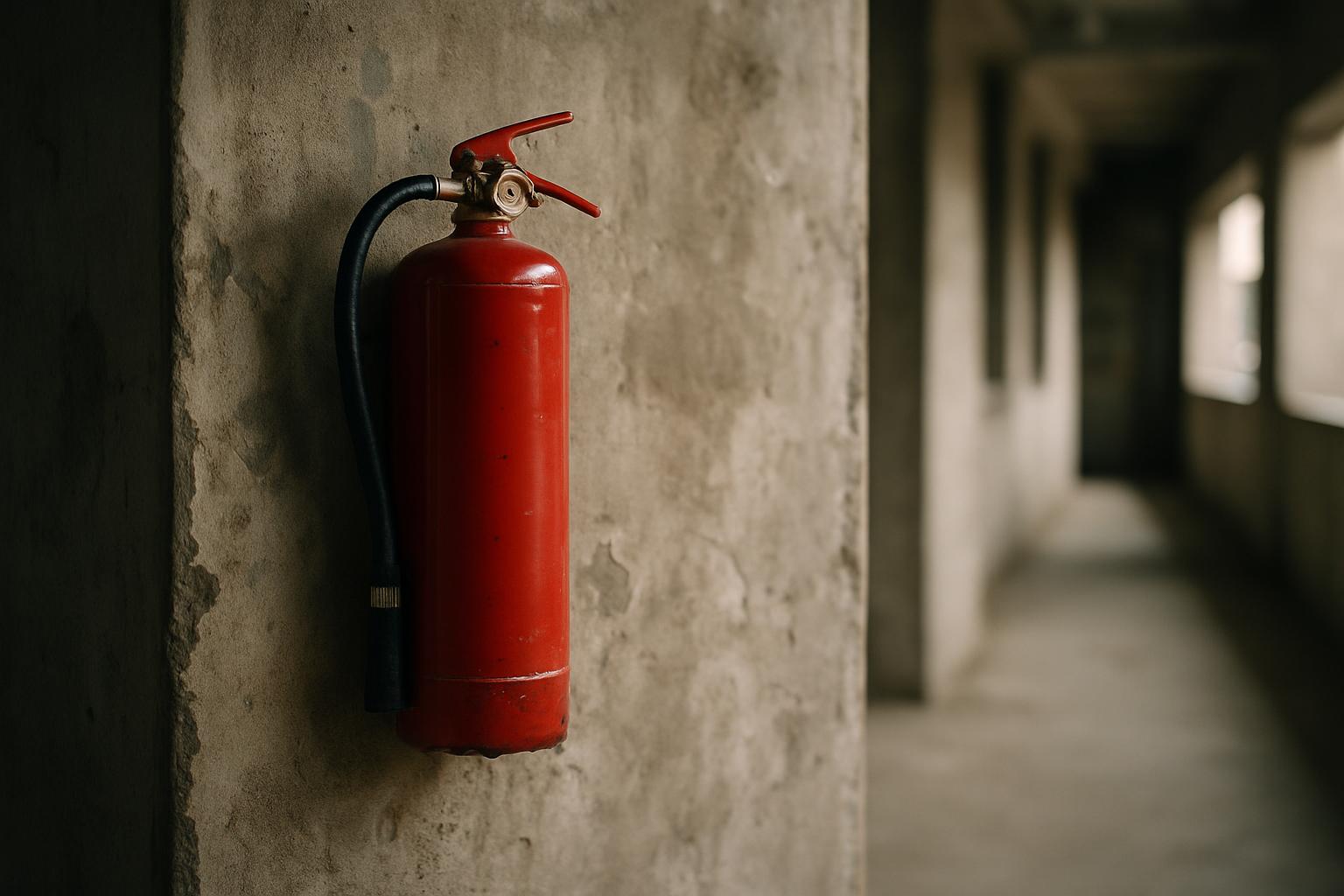
Photographs turn a claim into evidence. A line of text saying an extinguisher was missing its tamper seal is a statement; a photo of that extinguisher with a visible gauge and date tag is a fact. For anything you flag — a blocked exit, a damaged seal, an obstructed sprinkler head, an emergency light that didn't illuminate — capture an image. The photo removes argument about the condition at the time and gives whoever fixes it a head start on what they're dealing with.
Finally, every entry needs a status and an outcome. Recording a fault is only half the job; the log has to show what happened next. An open item with no follow-up is arguably worse than no entry at all, because it proves you knew about a hazard and didn't close it out. The most defensible logs read as a complete loop: found, reported, assigned, fixed, verified — each step dated.
How timestamps make a record audit-ready
Timestamps are what separate a log that looks plausible from one that is genuinely defensible. A list of findings with no reliable dates can be written at any time — including the day before the audit, or the day after an incident. Auditors and investigators know this, which is why they look hard at when entries were created and whether the timing is consistent. A record where each item carries an automatic, tamper-evident timestamp is far harder to dispute, because it shows the inspection happened on the day you say it did.
The same logic applies to the gap between a problem being found and being fixed. If a fault was logged on the first of the month and closed on the third, the timeline speaks for itself — you acted promptly. If it was logged and then sat open for ninety days, that gap is visible too, and it's better to see it in your own data and act than to have an auditor find it for you. Timestamps don't just prove you did the work; they expose response times, which is exactly what regulators and insurers want to assess.
There's a practical warning here. Timestamps you type yourself prove nothing, because they can be set to anything. The value comes from times that are captured automatically by the system at the moment each action occurs, and that can't quietly be edited afterwards. That's the difference between a spreadsheet date field someone backfilled and a true audit trail — and under scrutiny, only the latter holds.
Building a schedule you can actually defend
Audit-readiness depends on regularity as much as detail. A log with one thorough inspection followed by a six-month silence invites the obvious question: what was happening in between? Different items run on different cadences — alarm tests and emergency lighting checks tend to be frequent, extinguisher servicing and fire door inspections less so, and a full fire risk assessment review periodically. Map each check to its interval, write the interval down, and then prove you hit it. Consistency in the record is itself evidence of a managed system.
Local rules vary by country and building type, so treat published intervals as your floor, not your ceiling, and confirm what applies where you operate. Whatever the requirement, the log should make it obvious that you met it. Auditors look for a steady rhythm of dated entries, not a flurry of activity that suspiciously coincides with a renewal or an incident. A predictable pattern of checks, each logged on time, is the single clearest signal that fire safety is being managed rather than performed for show.
Assign ownership so checks don't fall through the cracks. Every recurring inspection should have a named responsible person and a way to confirm it was done, so a missed check surfaces immediately rather than becoming an invisible gap discovered months later. The strongest schedules are the ones where a skipped inspection is impossible to ignore.
Common reasons a log fails audit
The most frequent failure is the open-loop problem: hazards recorded but never shown as resolved. An auditor reading "fire exit obstructed by stored pallets" with no closing entry sees an organization that identified a serious risk and left it. Whether or not the pallets were actually moved, the log says otherwise, and the log is what counts. Every flagged item needs a visible resolution and a date, or it reads as negligence.
Second is missing evidence. Findings described in words but with no photographs are weaker, because they rely entirely on the inspector's memory and credibility. After an incident, when conditions have changed and people's recollections conflict, contemporaneous photos are often the only objective account of what the building looked like at the time. A log full of unillustrated claims is far easier to challenge than one backed by dated images.
Third is editability and gaps. If entries can be changed without trace, the whole log loses weight — an auditor can't tell an honest correction from a convenient rewrite. And unexplained gaps in the schedule, items logged in handwriting no one can read, or addresses and locations that don't match the building all chip away at credibility. A defensible log is specific, complete, evidenced, and locked once recorded.
How SnagGrid handles the fire safety inspection log
SnagGrid turns each check into a defensible entry without extra paperwork. During an inspection you snap a photo and drop a map pin — the address auto-fills, so the location is precise without typing — and add rough notes on what you found. AI then drafts a clear, factual report from those notes; it never invents facts, and you approve every word before anything is recorded or sent, so the entry says exactly what you saw. The photo becomes your evidence, attached to the item from the moment you capture it.
From there the timestamps do the work auditors care about. Every item is logged to an audit trail with the times it was raised, sent, and closed captured automatically rather than typed, so the record can't be quietly backdated. SnagGrid emails the right recipient for each issue, routes by category so fire-door faults and extinguisher problems reach the correct person, and gives one-tap follow-up reminders so nothing flagged stays open. A team dashboard with roles shows every outstanding item at a glance, and CSV export plus a scoped REST API with webhooks let you hand a complete, dated record to an inspector or feed it into your own compliance systems.
Pricing is $29 per month per organization for one seat, plus $15 per month for each extra seat — so a fire safety inspection log stops being a clipboard and a folder of loose photos and becomes a timestamped record you can put in front of an auditor with confidence.