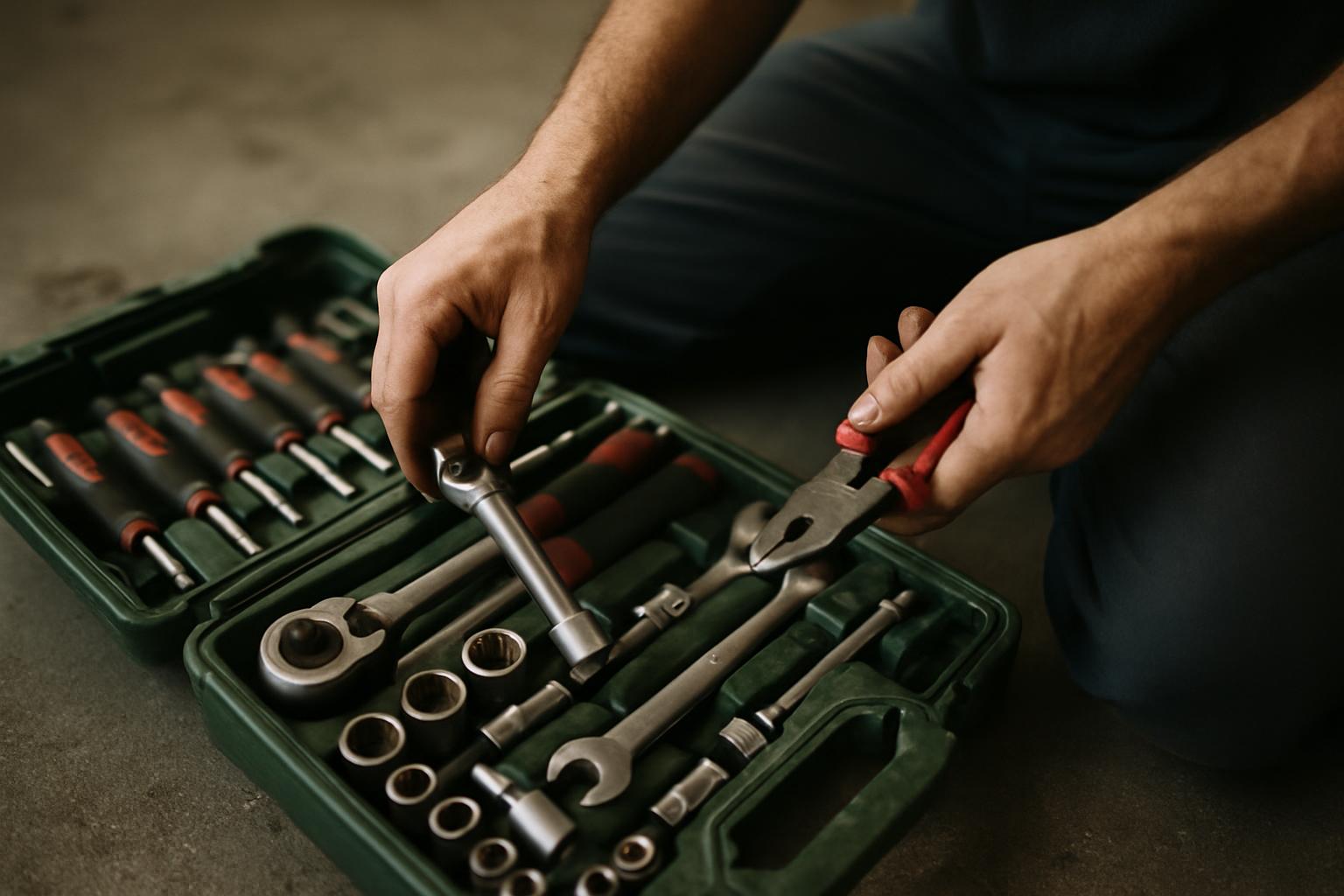
What first-time fix rate actually measures
First-time fix rate (FTFR) is the share of jobs you resolve completely on the first visit, with no return trip needed. Take the number of issues fully closed on the first attempt over a period, divide by the total number of issues you worked, and multiply by 100. If your team handled 200 jobs last month and closed 150 of them in a single visit, your first-time fix rate is 75 percent. The remaining 50 needed a second trip — a part, a specialist, another pair of hands, or simply another day.
The definition has to be honest to be useful. "Fixed" means the underlying problem is genuinely resolved, not that someone attended and left a temporary patch. If a technician shows up, makes the symptom go away for a week, and the same fault returns, that is not a first-time fix — it is a deferred second visit. Decide up front whether a job counts as fixed only when it is verified closed and stays closed, and apply that rule consistently. A flattering definition gives you a flattering number and no insight.
It also helps to be clear about what counts as a single "visit." For a roving maintenance team, a visit is one trip to the site. For an in-house facilities crew, it might be one dispatch against one work order. Whatever boundary you choose, write it down so the metric means the same thing in March as it did in January, and so two people calculating it land on the same figure.
Why a second visit costs so much more than you think
The obvious cost of a repeat visit is the labour and travel to go back. But that is only the visible part. A return trip also consumes a slot that a new job could have filled, so every avoidable second visit pushes your backlog out by one. Across a month, a fleet running at 70 percent first-time fix is effectively doing the work of a much larger team just to stand still, because a third of its capacity is spent revisiting work it already touched.
Then there is the cost you can't put on an invoice. From the customer's side, a repeat visit reads as "they couldn't fix it." Even when the delay is reasonable — a part genuinely had to be ordered — the experience is the same: time booked off, access arranged, and the problem still there. Repeat visits are one of the strongest predictors of complaints and churn, and they quietly erode the trust that makes the next job go smoothly. A high first-time fix rate is, in practice, a satisfaction metric wearing an operations badge.
Repeat visits also distort your other numbers. A team that patches quickly and returns often can post excellent response times and a healthy close rate while burning money and goodwill. That is why first-time fix rate belongs next to mean time to repair and SLA attainment, not in place of them — together they tell you whether speed is real or whether you are just moving fast in circles.
The real reasons jobs need a second visit
When you sort repeat visits by cause, a small number of patterns explain most of them. The biggest is almost always the wrong information at the start: a report that says "heater not working" tells the technician nothing about the make, the fault code, or which of three units in the building is affected, so they arrive without the right part and leave to order it. Vague reporting is the single largest controllable driver of low first-time fix rate, and it is the one most teams overlook because the report "got the job done" in the sense of starting it.
Other common causes cluster around preparation and routing. The job goes to someone without the right skill or certification for that fault. The part needed was knowable from the description but nobody checked stock before dispatch. Access wasn't arranged, so the technician couldn't reach the plant room. The issue was actually two issues bundled into one report, and only one got resolved. None of these are about technician competence — they are about what was known, and routed, and prepared before anyone got in the van.
The useful move is to tag every repeat visit with a reason and review them weekly. Once you can see that, say, 40 percent of your second trips trace back to incomplete initial reports and another 25 percent to parts not being on the vehicle, you know exactly where to spend effort. Improving first-time fix rate is rarely about working harder on site; it is about fixing the handful of upstream gaps that send people back.
How a better first report raises the rate
If incomplete information is the leading cause of repeat visits, then the report that opens the job is where first-time fix rate is won or lost. A strong report tells the person attending what is wrong, where exactly it is, and what "fixed" looks like — before they leave the depot. A photo of the fault, the precise location, the model or asset reference, and a plain description of the symptom together let someone load the right part and the right skill into the van the first time. That is the whole game.
Photos do a particular kind of heavy lifting here. A picture of a cracked fitting, a leaking joint, or a fault code on a display lets whoever is preparing the job recognise the part and the tool needed without a phone call or a guess. An accurate location means no time lost finding the unit on arrival, which matters most across multi-building sites and dispersed estates where "the one by the car park" describes four different things. The difference between a report that enables a first-time fix and one that guarantees a second visit is often just a photo and a precise pin.
Consistency matters as much as detail. When every report carries the same core fields — photo, location, category, description — the person routing and preparing the work can trust what they are looking at and act on it quickly. Ad-hoc reports scattered across phone calls, texts, and half-filled forms force the office to chase the gaps, and every gap they can't close before dispatch becomes a coin-flip on whether the visit succeeds. A structured intake is the cheapest first-time-fix improvement available, because it costs nothing on site and saves a whole trip.
Building first-time fix rate into how the team runs
Measuring the number is step one, but it only changes behaviour when it is visible and owned. Put first-time fix rate on the same board as response time and backlog, segment it by team, by job type, and by site, and review the trend rather than a single month. A blended rate of 78 percent might hide a plumbing category sitting at 55 percent — and that category is where your repeat visits, your costs, and your complaints are concentrated. The detail is where the action is.
Set a target that fits your work. Pure-software or low-complexity field work can reach the high 80s and beyond; heavy plant, specialist repairs, and anything dependent on ordered parts will sit lower, and that is fine. The point of the target is direction, not a single ideal figure copied from another industry. Pair the target with the repeat-visit reason codes so that when the rate dips, you can name why, and so improvement is a list of specific upstream fixes rather than a vague instruction to do better.
Finally, make the audit trail part of the metric, not an afterthought. To trust your first-time fix rate you need a reliable record of when each issue was raised, attended, and confirmed closed — and whether it reopened. Without that timeline you are estimating, and estimates drift toward optimism. With it, first-time fix rate becomes a number you can defend in a review, tie to cost, and improve deliberately, week over week.
How SnagGrid helps you raise first-time fix rate
SnagGrid attacks first-time fix rate at the place it is usually lost — the first report. You snap a photo and drop a map pin, and the address auto-fills, so every issue arrives with the visual evidence and the precise location a technician needs to prepare properly. You add rough notes, and AI drafts a clear, factual report from what you wrote. It never invents facts, and you approve every word before it sends, so the person attending gets an accurate description rather than "heater not working" — and they can load the right part and skill before they leave.
From there, per-category routing sends each issue to the right recipient automatically, so the plumbing fault doesn't sit in a general inbox or land with someone who can't action it. Every item is logged to an audit trail with timestamps for when it was raised, sent, and closed, which is exactly the record you need to calculate first-time fix rate honestly and spot the jobs that reopened. One-tap follow-up reminders keep open items from stalling into avoidable return trips, and CSV export plus a scoped REST API with webhooks let you pull the data into your own reporting to track the rate over time.
A team dashboard with roles gives supervisors the whole picture at a glance, and a public no-login report form with its own QR code lets residents, tenants, or the public log issues with a photo and location from the start — so even reports you didn't raise yourself arrive complete enough to fix first time. Pricing is $29 per month per organization for one seat, plus $15 per month for each extra seat, which is a small line against the cost of a single avoidable second visit.