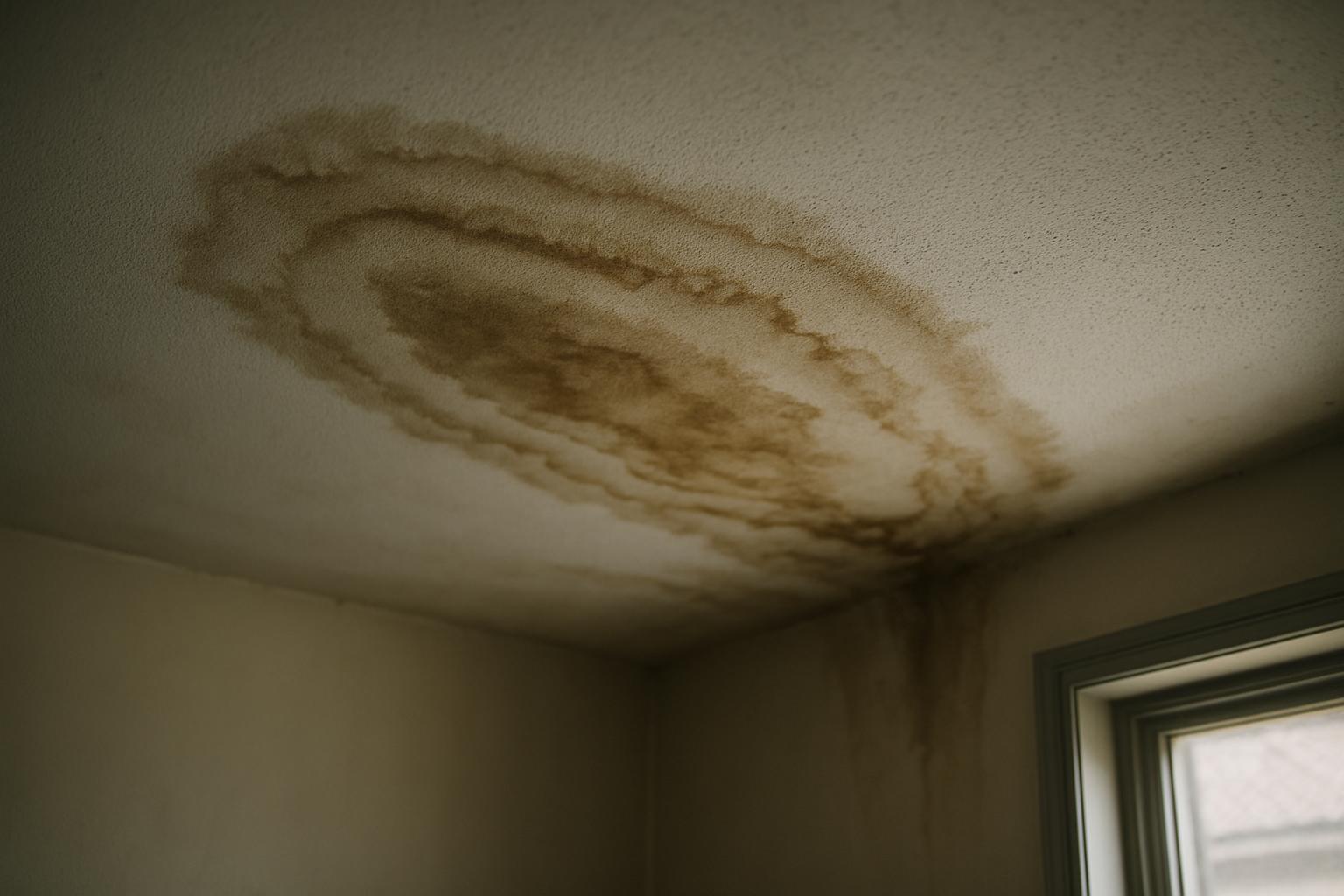
Why bad reports never show up on the budget
The reason poor maintenance reporting is so easy to ignore is that it never arrives as a single line item. No one writes a cheque for "ambiguity." Instead the cost is smeared across dozens of small events: a technician who drives out and can't find the fault, a request that sits in someone's inbox for a week, a tenant who calls three times because nobody confirmed anything was happening. Each event looks minor. Added up across a year, they are often larger than the repairs themselves.
That invisibility is exactly what makes the problem persist. A team can run for years with sloppy reporting and never connect the wasted hours back to their cause, because the waste is structural rather than dramatic. The first step to controlling the cost is naming the categories where it accumulates — repeat visits, escalation, disputes, and liability — and being honest that a two-line report with no photo is the upstream source of all four.
It helps to think of a report not as paperwork but as a set of instructions to a future person who wasn't there. If those instructions are incomplete, that person fills the gaps with guesses, phone calls, and second trips. Every guess they have to make is a cost you created at the moment the report was written.
Repeat visits: paying twice for the same job
The most measurable cost of poor maintenance reporting is the repeat visit. A report that says "leak in bathroom" sends a technician out with no idea whether to bring a washer, a length of pipe, or a tile cutter. They arrive, diagnose, realise they lack the part, and leave to return another day. You have now paid for two journeys, two arrival windows, and twice the scheduling overhead to fix one fault. First-time fix rate — the share of jobs closed on the first visit — is the metric this destroys, and it is one of the clearest signals that your reporting is too thin.
Location ambiguity compounds it. "Third floor" in a building with three identical wings, or "the back door" on a site with five, turns a quick fix into a search. A report that pins the exact spot and shows a photo of the fault lets the person scope the work before they leave the depot — bring the right part, the right tool, the right skill set. That single change can move a fault from a two-visit job to a one-visit job, which is the difference between paying once and paying twice.
Multiply this across a portfolio and the numbers get serious. If a quarter of your jobs need a second trip because the first report was unclear, you are running roughly twenty-five percent more visits than the work requires. That is fuel, labour, and capacity you could have spent clearing the backlog instead of chasing your own tail.
Escalation: small problems that grow while they wait
A report that never reaches the right person doesn't just sit still — the underlying problem keeps moving. A slow drip becomes a stained ceiling becomes a collapsed plasterboard. A loose handrail becomes an injury. A flickering light becomes a failed circuit. The longer a clear request takes to land with someone who can act, the more the repair costs when it finally happens. Poor routing converts cheap, early fixes into expensive, late ones.
This is where vague reporting and lost requests overlap. When an issue is logged but unclear, nobody can triage it, so it drifts to the bottom of the pile. When it's logged but mis-routed — sent to the wrong department, buried in a shared inbox, mentioned in a chat thread that scrolled away — it may not be triaged at all. Either way the clock runs. Maintenance service levels exist precisely to cap this drift, but an SLA only works if the request is captured cleanly enough to start the clock and assign an owner the moment it arrives.
The cure is making the path from report to responsible person short and automatic. Every issue should have a category, every category should have a destination, and every item should have a named owner from the moment it's raised. When routing is built into the report rather than bolted on afterwards, small problems get caught while they are still small — which is the cheapest time to fix anything.
Disputes: when no one can prove what happened
A surprising amount of maintenance cost is argument. Did the contractor actually fix it? Was the damage there before the tenant moved in, or after? Did anyone report the hazard before it caused harm? When reports are thin and undated, none of these questions has a clean answer, and the absence of evidence is itself expensive — in goodwill, in withheld payments, in time spent reconstructing a timeline from memory and scattered messages.
Photos and timestamps are what end these disputes before they start. A report that shows the fault on a specific date, with a geotagged image and a clear note, removes the room to argue. Before-and-after photos prove the work was genuinely done. A timestamp proves when an issue was raised and when it was closed. None of this is exotic; it is just the difference between a record you can stand behind and a story you have to defend. Teams that skip it end up paying for the same fact twice — once to do the work, once to prove they did.
The pattern repeats with sign-off and final payment. Where a clear, photo-backed record exists, approvals move fast because there is nothing to question. Where it doesn't, every closed job carries a small tail of risk that it might be reopened, disputed, or charged back. Good reporting is, in effect, cheap insurance against expensive disagreements.
Liability: the cost that arrives all at once
The rarest cost of poor maintenance reporting is also the largest. Most of the time a missing report just wastes a few hours. Occasionally it sits underneath a safety incident — a fall, a fire, a flood, an injury — and at that point the question is no longer about efficiency but about whether you can show you acted reasonably. "We knew and did nothing" and "we were never told" are both far worse positions than "here is the dated report, the photo, and the record of what we did about it."
Regulators, insurers, and courts in every jurisdiction tend to ask the same thing after an incident: what did you know, when did you know it, and what did you do? A maintenance record that answers those three questions cleanly is the difference between a contained event and an open-ended exposure. The cost here is asymmetric — most reports will never be tested this way, but the ones that are can dwarf every other line on the maintenance budget combined. That asymmetry is the whole argument for treating every report as potential evidence.
This is why an audit-ready trail matters even for routine work. You cannot know in advance which of today's mundane reports will turn out to be the one that matters. The only safe assumption is that any of them might, which means each one should carry enough detail — what, where, when, who, and what was done — to stand on its own a year later.
How SnagGrid cuts the cost of poor reporting
SnagGrid is built to remove the ambiguity that drives all of these costs at the point where the report is created. You snap a photo and drop a map pin, and the address auto-fills — so the location is exact and the evidence is captured in the same motion. You add rough notes, and AI drafts a clear, factual report from what you wrote. It never invents facts, and you approve every word before it sends, so the report says what you saw and nothing more. That alone attacks the repeat-visit problem: the person who picks up the job can scope it properly before they leave.
From there the workflow closes the other gaps. SnagGrid emails the right recipient through per-category routing, so issues reach the responsible person instead of drifting in a shared inbox — that is the escalation cost handled. Every item is logged to an audit trail with timestamps and photos, which is what ends disputes and gives you an audit-ready record if liability is ever in question. One-tap follow-up reminders keep nothing stalled, a team dashboard with roles shows the whole backlog at a glance, CSV export and a scoped REST API with webhooks let you wire the data into your own systems, and a public no-login report form with its own QR code lets residents or the public raise issues cleanly.
Pricing is $29 per month per organization for one seat, plus $15 per month for each extra seat — modest against even a handful of avoided repeat visits. The point isn't the software for its own sake; it's that the cost of poor maintenance reporting is paid in hours, escalations, disputes, and risk, and the cheapest place to stop all four is the moment the report is written.