Why snagging before handover matters
Snagging is the process of inspecting a newly built or refurbished property and recording every defect, unfinished detail, and item that falls short of the standard you were promised. On a new build that means everything from a hairline crack in a windowsill to a boiler that hasn't been commissioned. The point is not to be difficult — it's to create an agreed, evidenced record of what's outstanding before the property is signed off as complete.
Timing is the part most buyers get wrong. Once you've taken the keys and the developer has been paid in full, your position changes. Defects still get fixed under warranty in most markets, but the urgency on the builder's side drops, scheduling gets slower, and any disagreement about whether something was "like that on day one" becomes your problem to prove. A documented snag list completed before handover flips that around: the issues are logged while the developer still has every reason to clear them quickly.
It's also worth being realistic about scope. Some buyers hire a professional snagging inspector, and on a large or expensive purchase that can pay for itself many times over. But a careful owner with a method, a phone camera, and a few hours can capture the overwhelming majority of defects themselves. Whether you do it yourself or hire someone, the discipline is the same — work systematically, evidence everything, and don't rely on memory.
Prepare before you walk the property
Before the inspection, gather your reference points. Dig out the contract, the specification or brochure, and any plans or finishes schedule you were given. These tell you what you were actually promised — the model of appliance, the type of flooring, the number of sockets in a room. A lot of snags are not "broken" so much as "not what was agreed," and you can only catch those if you know what was agreed in the first place.
Pack a small kit. A phone for photos and notes is the core of it, but a few cheap tools make the inspection far more thorough: a marble or small ball to roll across floors and check for level, a phone charger or socket tester to confirm power, a spirit level or a level app, a torch for dark corners and loft spaces, and a roll of low-tack tape or removable dot stickers to physically mark snags as you find them. Wear clothes you don't mind getting dusty and bring someone with you — a second pair of eyes catches things you'll walk straight past.
Plan to do it in daylight and give yourself time. A typical house takes two to three hours to snag properly, and rushing is how you miss things. Agree the inspection with the developer in advance where you can, and ideally do it before completion so the list feeds directly into handover. If services are connected, you want heating, water, and electrics live during the visit so you can actually test them rather than guess.
Work the property room by room
Snag in a fixed order so you never lose your place — most people work clockwise around each room, then move through the house in a consistent route, and finish with the exterior and any loft or garage. Within each room, look high to low: ceilings and cornices, then walls, then windows and doors, then fixtures, then floors. A consistent path is what stops you from drifting and leaving a whole wall unchecked.
In each room, check the things that are quick to overlook. Open and close every door and window fully — they should move smoothly, latch cleanly, and seal without gaps or draughts. Run your eye along skirting, architrave, and where different surfaces meet; gaps, poor caulk lines, and mismatched trims are some of the most common new build snags. Look at paintwork in raking light from a window, where roller marks, missed patches, and drips show up that you'd never see head-on. Test every socket and switch, run taps hot and cold, flush toilets, and check that extractor fans and appliances actually power up.
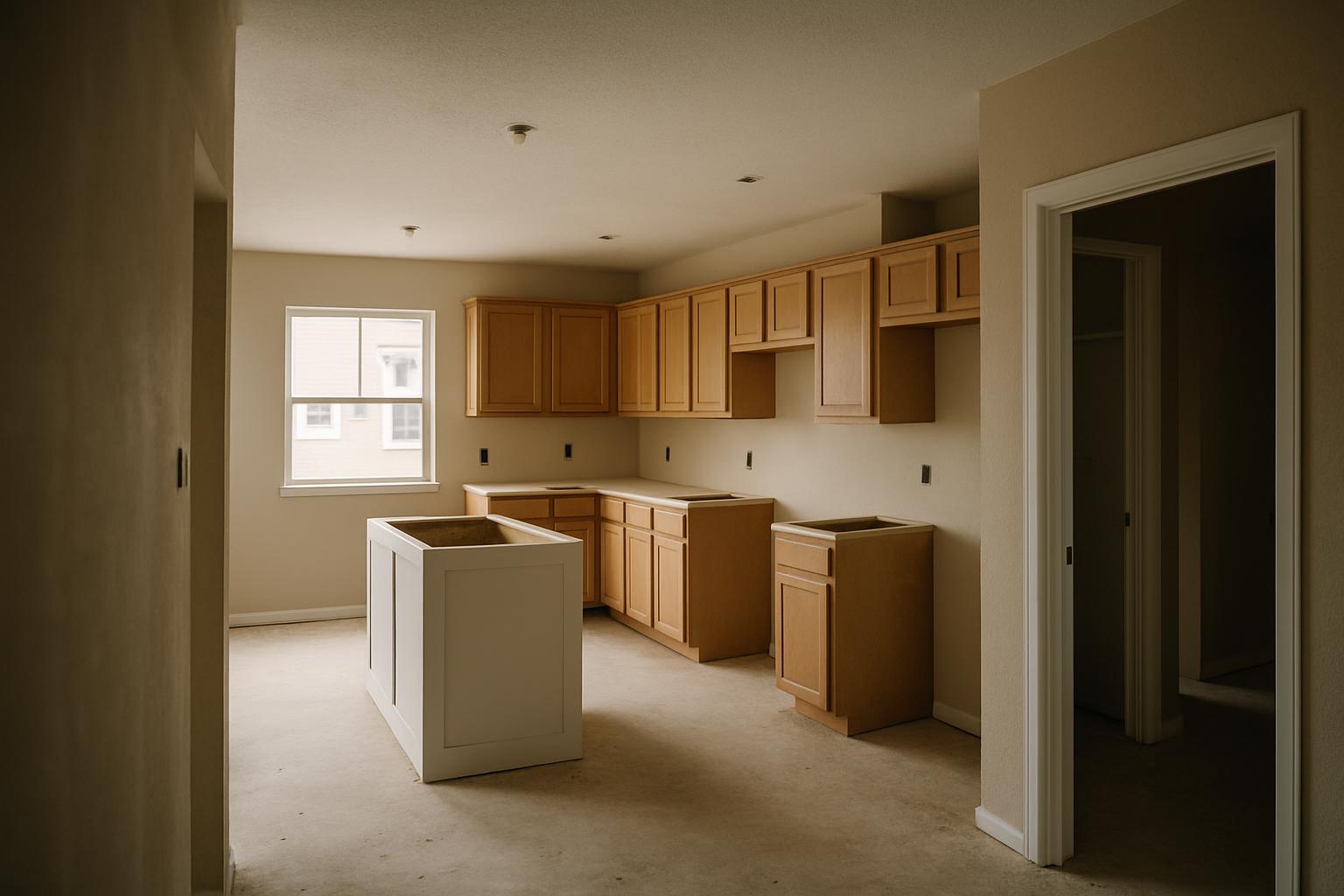
Kitchens and bathrooms deserve extra attention because they hide expensive problems. Check that worktops are level and joints are sealed, that cabinet doors align and close softly, that tiling is even with consistent grout lines and no hollow-sounding tiles, and that there's no movement or leak under sinks. Outside, walk the boundary and roofline: look for cracked or slipped tiles, blocked or detached gutters, render cracks, uneven paving, gaps in pointing, and drainage that runs away from the building rather than toward it. The loft, if accessible, often reveals missing insulation, gaps in the membrane, or untidy cabling.
Capture each defect so it can't be argued away
A snag is only as useful as the evidence behind it. For every item, capture three things: a clear photo, the exact location, and a short factual note of what's wrong. "Scratch on glass" is weak and easy to dispute. "Deep scratch across lower-left pane of the rear bedroom window, roughly 10cm long" is something a contractor can find and fix without a single follow-up call — and something that's hard to wave away later.
Photograph well. Take one wide shot that establishes which room and where on the wall or floor the defect is, then a close-up that shows the detail. In good light, a coin, a tape measure, or your hand next to the defect gives scale. Photos that carry a timestamp and location are especially valuable on a new build, because they prove the condition of the property on the day you inspected — before anyone had a chance to say the damage happened after you moved in.
Keep one master list rather than scattering notes across your phone, a notebook, and your partner's camera roll. Each entry should tie its photo, location, and description together so nothing gets separated. Number the items and, where it helps, physically mark the snag in the property with a sticker or low-tack tape so the trades who come to fix them can find each one fast. The goal is a list a developer can act on directly, item by item, with no ambiguity about what or where.
Submit the list and chase it to closed
Send the completed snag list to the developer in writing, and keep your own dated copy. A written, photo-backed submission does two jobs at once: it gives the builder a clear, actionable work list, and it timestamps your concerns so there's no dispute later about what was raised or when. Reference your contract and the agreed completion standard where an item falls short of specification rather than just being damaged.
Then comes the part that decides whether snagging was worth doing — following up. A list that's sent and forgotten is a house full of problems that stay broken. Agree a timeframe for the work, ask to be told when items are done, and re-inspect before you accept anything as closed. Don't take "all sorted" on trust; walk the property again, check each numbered item against your evidence, and only mark it complete when you've confirmed it with your own eyes. Defects that reappear or were patched poorly go straight back on the list.
Keep the whole record even after everything is signed off. New build warranties typically run for years, and structural cover longer still, so the photos and dates you captured at handover remain useful if a problem resurfaces or a fix fails. A clean audit trail of what was raised, when it was sent, and when it was confirmed fixed is exactly what you'll want if you ever need to make a warranty claim down the line.
How SnagGrid handles new build snagging
SnagGrid is built for exactly this kind of walkthrough, so the evidence and the follow-up don't fall apart the moment you leave the property. As you move room by room, you snap a photo and drop a map pin — the address auto-fills, so the location is right without typing — and add your rough notes. AI then drafts a clear, factual report from what you wrote. It never invents facts, and you approve every word before anything goes out, so each snag says exactly what you saw and nothing more.
From there SnagGrid emails the report to the right recipient — your developer, site manager, or solicitor — logs every item to an audit trail, and gives you one-tap follow-up reminders so nothing stalls between handover and fix. A team dashboard with roles lets a buyer and an inspector share one list, you can export the whole thing to CSV for your records or a warranty claim, and case tracking keeps each snag visible from raised to closed. There's even a public no-login report form with its own QR code, handy if a tradesperson on site needs to log something without an account.
Pricing is $29 per month per organization for one seat, plus $15 per month for each extra seat — modest against the cost of a defect you couldn't prove was there on day one. Instead of a scattered set of photos and a notebook you can't fully trust, you walk away from handover with a numbered, evidenced, time-stamped record you can stand behind right through the warranty period.